Practicing Advocacy: Accessibility in the AD+PR Field
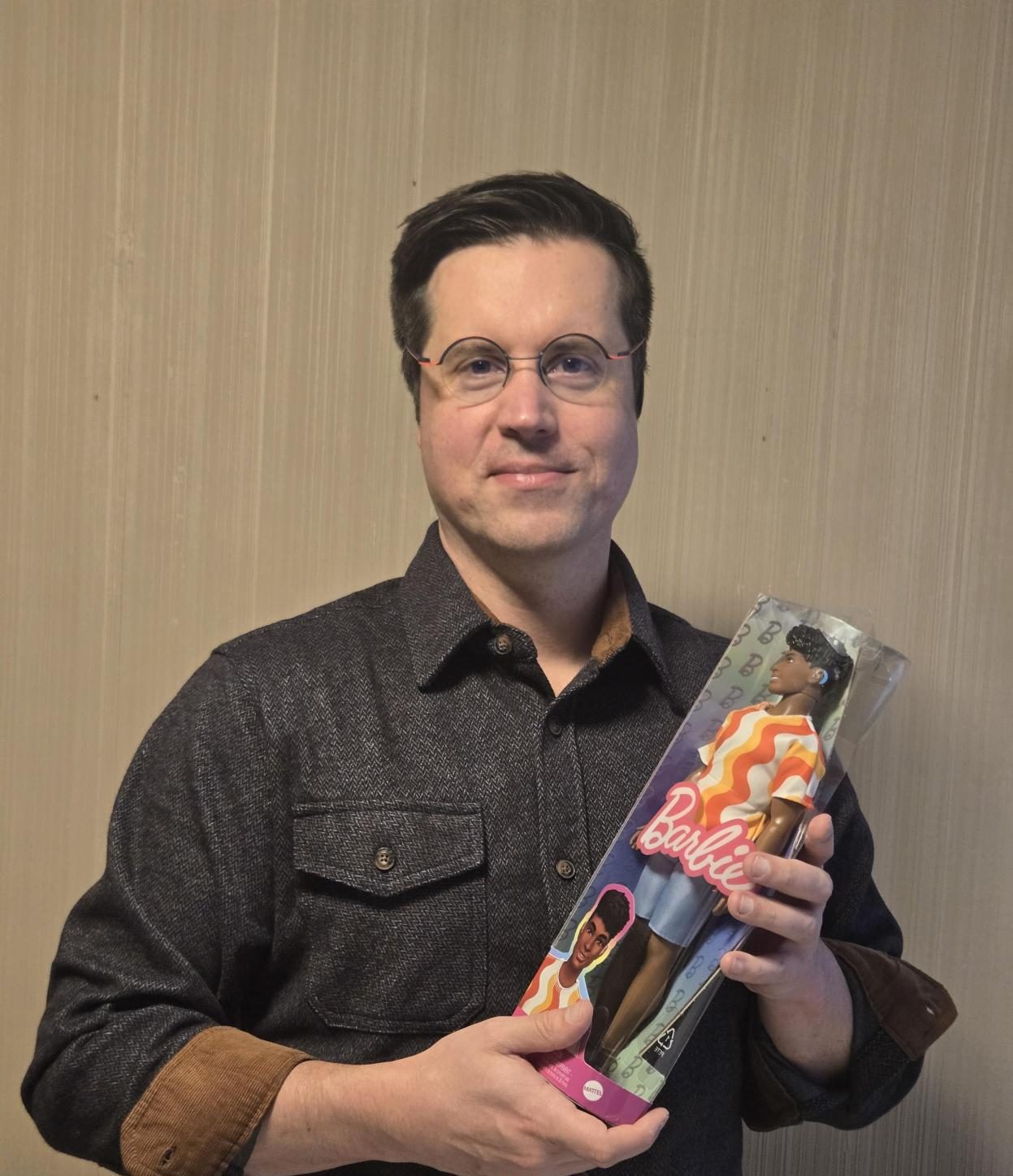
Following assistant professor, Edward Timke’s, pathway to disability advocacy through research
By: Emilio Silerio Gonzalez
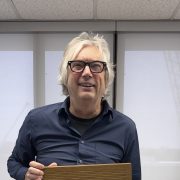
Assistant professor, Edward Timke, Ph.D., was born without ear canals. Growing up, like many people with disabilities, he struggled with internalized ableism.
“Telling yourself ‘I’m not disabled’ rejects a disability identity,” said Timke. “At an early point, I realized, ‘I am who I am,’ so really I’ve always been an advocate, even when I didn’t know it.”
Timke’s early experiences watching television with hearing aids catalyzed his unconscious advocacy and passion for accessibility. To conserve battery, Timke would turn off his hearing aids during commercials and sit closely to the television to read lips or hear what he could through the speakers’ vibrations.
Pathway to disability advocacy in academia
When graduating from MSU, Timke planned on becoming a foreign service officer. However, his convictions led him on a different path.
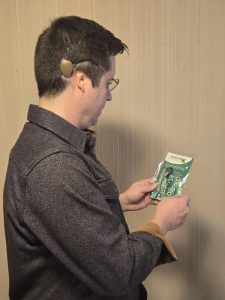
“I didn’t agree with what was happening in terms of human rights, so instead of serving the administration, I went into international education because I loved exchanges,” said Timke. “But for one to advance their career in international education, a Ph.D. is needed.”
Upon completing his Ph.D., Timke landed a job at UC-Berkeley’s media studies program where he dove into the world of advertising and gained the tools to research.
“I was looking to do research projects that could give me a spark and impact the world in a positive way,” said Timke.
At Berkeley, Timke realized how students struggled daily with a lack of accessibility. Along with personal experiences, Berkeley’s long history of disability pride propelled Timke into disability advocacy through research.
“I saw how many students were struggling with basic accommodations,” Timke said. “Seeing people push back on that, it wasn’t right.”
Today, much of Timke’s research focuses on disability representation and accessibility in advertising. His research provides foundation for disability innovation in communications, advertising and design.
Accessibility in the field of AD+PR
“Accessibility means designing the world in a way that allows you to live…it goes back to universal design, where designing for one is designing for many,” said Timke. “In our capitalist society, AD+PR is like the fuel. When people with disabilities cannot participate in that crucial structure of our society, it is an issue of equality.”
Accessibility is not just about inclusion; it can be a symbiotic business opportunity. Like marketing, accessibility is about meeting people where they are. Without accessible design, both the brands and those excluded are missing out.
Advice for AD+PR students to be accessible communicators
Timke refers to the mantra “designing for many.”
“Beyond physical barriers, accessibility also means keeping things simple, not by dumbing it down, but streamlining so people with cognitive disabilities can get it,” he said.
Timke stresses that universal design goes beyond doors and ramps; it requires inclusion of all forms of disabilities, including invisible and cognitive disabilities. He urges AD+PR professionals to take a step back and ask: “is this accessible?”
Learn more about Timke and his impactful work online here: https://comartsci.msu.edu/our-people/edward-timke